Saturday, August 12, 2017
9 Elements of Effective Communication
Communication is one of the toughest things about leading. You work constantly to improve your verbal, written, and interpersonal skills. You strive to communicate strategically, systematically, and with empathy. You recognize the importance of effective communication with your team, your parents, your community. And yet, the effectiveness of your communication falls flat. It happens to everyone.
One thing that can always be better in just about every organization is communication. I know I need to continue to grow in this area. Clear communication is essential in personal relationships, in classroom settings, and across the entire school community.
Regardless of whether you are a principal, a teacher, or have another leadership role in your school. You can become a better communicator. It's something we should always strive to improve. When we are clear with our message and more understanding as listeners, it builds positive culture and improves the learning environment.
One of the most important things for effective communication is situational awareness. Our message is really not about us. It's about meeting the needs and expectations of others. We have to communicate with the audience in mind, if it's 1 or 100. It's important to adapt to the situation and communicate in a way that will meet others in a productive and positive manner.
Let's be clear, our communication is one way we influence others. Our communication should seek to lift up others, help them be stronger, and ultimately help them exhibit leadership qualities that are helpful to the mission. Sometimes this involves delivering hard truths, setting boundaries, and standing firm.
As I write this post, I am reminded how much I need to review these principles. I often fall short in communicating effectively and want to continuously strive to improve these skills.
1. Listen more, talk less
Effective communication is not just broadcasting a message. It's not saying more and saying it louder. Great communicators are great listeners. They really try to understand the perspective of others. They initiate dialogue. Dialogue involves sharing meaning in the conversation. It doesn't necessarily mean there is full agreement. It just means that both parties are listening with empathy and really trying to understand each other and find areas of common ground.
2. Reach out.
Even though I try to be visible throughout our school, sometimes I find I'm talking to the same people over and over. I need to make sure that I'm communicating regularly with everyone. The same thing can happen in the classroom. It's easy to engage outgoing students or teachers who are talkative. But it's important to connect with as many people as possible.
3. Never miss a chance to share the message
Look for opportunities to share your key message. What is the vision of your classroom or school? What is the focus? Too often we only focus on the 'why' behind our work at the start of the school year. We emphasize the mission and the vision. But if we don't revisit that on a regular basis, the mission will veer off course. One of my #1 goals for next year is to fine-tune our vision, communicate our vision, rinse and repeat. Whatever you think is the right amount of communication to get your message across, triple it.
4. Invite two way communication
Don't just wait for feedback to come to you. Ask for it. Check in with your students, your parents, your colleagues, everyone. Be curious about how people are experiencing your classroom or school. Ask interesting questions. What's running smoothly? What could be improved? What skills are you improving? What skills would you like to improve? What have you achieved that makes you proud? What do you need from me to reach your goals? How can I help you?
5. Show acceptance and encouragement
Make your communications more personal. Invite people in. Make them feel like they belong. When people feel accepted, they are more willing to listen. Empathy establishes trust. It says "I accept you." And empathy provides the foundation for encouragement. Encouragement leads to growth. Encouragement says, "I believe in you." Encouraging leaders help people take next steps to grow and contribute in more powerful ways.
6. Activate others to spread the message
Who else can help clarify or repeat the message? If you are the only one sharing a message, you are greatly limiting your reach. As you build your team, give them a nudge about the things that need to be communicated. Model for them the type of communication that is needed. I always encourage our teachers to never miss a chance to say something good about our school. When we activate others to help share the message, it builds bridges between our school and community.
7. Evoke emotion
The most powerful communication is tied to emotion. It's personal. We feel something. Great leaders don't just communicate a clear message, they offer a compelling message. They speak not only to the mind, but to the heart. We can have all the information in the world that we should do something, and yet we won't take action. We are only moved to action when we are moved. We need inspiration. Leaders evoke emotion when they show how much they care, when they reveal their own emotions, and when they help others feel they are part of something important that is making a difference. We all want to be part of something bigger than ourselves.
8. Read Between the Lines
Leaders must have awareness of what's being communicated even if it's not being said. The communication through body language, tone of voice, and behavior is telling. Leaders should always work at building awareness and seeking to bring forward meaning that might be hidden or unknown. There are too many times I picked up on signals but brushed them aside, only to find out later that the problem was much bigger than I realized. I want to improve my ability to pick up on underlying concerns before they become serious issues. It's always best to be proactive rather than reactive.
9. Stay calm and be positive
Anyone who aspires to be a leader will face challenges and be expected to rise to the occasion. Strong leaders are able to face difficult circumstances while remaining calm and positive. No matter what happens, we have a choice how we will respond. We can respond with fear, anxiety, and anger. Or, we can respond with diligence, duty, and action. It doesn't help to fret the problem. It helps when we rally together to overcome the problem.
Question: What aspects of communication are most challenging for you? What frustrates you about communication? I want to hear from you. Leave a comment below or respond on Facebook or Twitter.
Sunday, August 6, 2017
Schools Should Be Places Where the Present and Future Collide
Futurists are scientists or social scientists who look ahead to the future of what might be possible. They don't necessarily try to predict the future. No one can do that. But they do explore the possibilities of how current realities might lead to future developments in any and all areas of life.
Futurists believe in progress. They believe there is more to be done, that we can expand our capacity, that we can solve some of the most pressing problems of today. Of course, they also warn of what might happen if we don't address some of the potential problems of the future.
Years ago, Harvard Professor Edward Banfield described a study in his book Unheavenly Cities related to factors that best predicted individual's upward social mobility and economic prosperity. He expected factors like family background, intelligence, connections, race, or some other fixed characteristic to be most influential.
But what he found surprised him. The greatest factor related to future productivity and success was what he termed "long-term perspective." Writer Brian Tracy describes Banfield's findings:
He said that men and women who were the most successful in life and the most likely to move up economically were those who took the future into consideration with every decision they made in the present. He found that the longer the period of time a person took into consideration while planning and acting, the more likely it was that he would achieve greatly during his career.The importance of long-term thinking makes sense to me. We are faced on a daily basis with decisions to do what is easiest in the short-term or do what's best in the long-term. Wisdom is knowing the right thing to do and having the courage to do it.
But it's more than delayed gratification and self-discipline. It is also having a vision for what the future will demand. It's thinking like a futurist. It's being forward-thinking and reflecting on how a changing world will impact my world, the way I live, and work, and interact.
It's also important for educators and schools to have a long-term perspective. In my upcoming book, Future Driven: Will Your Students Thrive In An Unpredictable World? I challenge educators to reflect on their own perspective.
Schools should be less like time capsules and more like time machines. The time capsule approach only protects the status quo. It assumes the way we have taught in the past is good enough for today's students too. The time capsule teacher wants to remind us of everything in the past and wants to filter everything in the future through that. To be blunt, the time capsule teacher is stuck in the past.
But the time machine teacher wants to transcend the current reality. When you think about stories involving time machines, they typically involve using time travel to solve a problem or impact a destiny. They involve a hero's journey.
In this case, I am suggesting that time machine teachers want to create a better future. They have a long term perspective. Even though they can't literally visit the future, they are future driven. They are pushing forward and living in the emerging future.
We are living in a rapidly changing, complex world. Our students will need a future driven education to be ready for the challenges they will face.
Educators make the biggest impact in a place where the future and the present collide. A future focus, combined with action today, has the greatest potential to produce positive change. We need to have a long-term perspective and so do our students. We have to model that for them and cause them to think in those terms.
The place where today meets tomorrow is where you can make the greatest difference as an educator. Your impact will depend on your perspective and your actions.
I expect Future Driven to be released in a matter of weeks. It will challenge your perspective. It will help you increase your capacity for positive change. It describes how to become a time machine teacher and how to create a future driven school.
I don't want to jump through hoops. I don't want to go through the motions. I never want to waste precious time. I want to do my part to create a brighter future. I believe most educators want the same. You are building futures every day.
Question: What are ways our schools are time capsules, stuck in the past? What are you doing to move forward and have a long-term perspective? I want to hear from you. Leave a comment below or respond on Facebook or Twitter.
Wednesday, August 2, 2017
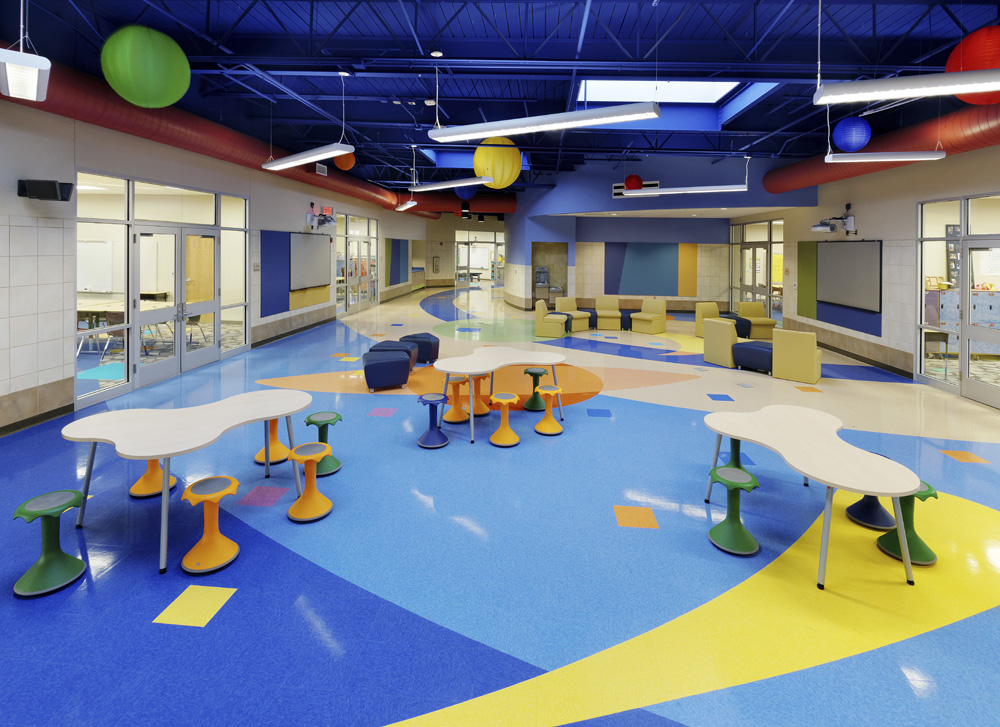
7 Resources for Designing Innovative Learning Spaces
![]() |
| Retrieved from http://sdaarchitects.com/wp-content/uploads/2012/10/Joplin-IrvingElementary-Int-SouthWing2-01.jpg |
With back to school right around the corner, I know many educators are thinking about how to make upgrades to their learning spaces for the new school year. The design of our classrooms can have a significant impact on learning.
The choices you make in setting up your classroom will send a message to your students from the first day of school. Students will instantly draw conclusions: Is this a welcoming place? Will I work with others? Am I valued? What kind of learning will I be doing here?
I believe it's important to create an environment that values students, gives them in a voice in the classroom, and creates a space that is forward-thinking and modern.
Although your school may not be able to purchase expensive furnishings, there are things you can do to design on a dime. I know several teachers in our building found ways to do inexpensive upgrades to their classrooms.
Here are seven articles that I found helpful in thinking about design upgrades for our school.
6 Must-Have Classroom Spaces for Project-Based Learning
By: Danish Kurani. These six spaces facilitate learning that goes beyond the realm of the traditional classroom and can be created in almost any type of building. Whether you're planning a new building or updating the one you're in, these are possible for you.
Designing Learner-Centered Spaces -- THE Journal
Learning Spaces Learning spaces must become learner-centered. Editor's note: The following is excerpted from a chapter of the book, " Learning Transformed: 8 Keys to Designing Tomorrow's Schools," published by ASCD in June. The authors and publisher have given their permission to republish portions of chapter 4, "Designing Learner-Centered Spaces."
Tips for Creating Wow-Worthy Learning Spaces
"Look at your learning space with 21st-century eyes: Does it work for what we know about learning today, or just for what we knew about learning in the past?" -The Third Teacher Does your classroom mirror the rectilinear seating arrangement popular in Sumerian classrooms, circa 2000 BCE?
6 ways to personalize learning with flexible seating
Putting students at the center of learning takes a double commitment. One to ensure that instruction and learning address distinct student needs, interests and aspirations, and one to provide spaces that support a student-centered program. It also requires educators to consider the various teaching formats they use and creating learning environments to support them.
Flexible Seating and Student-Centered Classroom Redesign
I'm a firm believer in keeping the focus on what's really important: the students. If student motivation and higher engagement is truly the desired end game, then we as teachers must adapt right along with our students in our classrooms.
Three Ways to Design Better Classrooms and Learning Spaces
The problems that plague education around the world aren't the result of a lack of attention or care. Parents, business leaders, political leaders and educators in countries everywhere are dedicated to improving how they educate their people. Every year, billions of dollars are spent on education initiatives in curriculum and teaching practices.
6 Ideas for Classroom Design
As the new school year nears or begins for you, consider how the design of your classroom can have a huge impact on you and your students. Try these ideas to design your classroom this year. To learn more, check out one of our previous posts: Purposeful Learning Spaces.
What are you plans for upgrading your classroom for back to school? How will you use your space to inspire learning? I want to hear from you. Leave a comment below or respond on Facebook or Twitter.
Thursday, July 27, 2017
How To Have Killer Meetings That Get Results
I recently read Death by Meeting by Patrick Lencioni. This book is a must read for any leader who wants to improve the quality of meetings in his or her organization. Every team could benefit from the insights shared in this leadership fable.
The problem with meetings is that they are often boring, and they don't usually get the desired results. There are a couple of reasons this happens. I'd like to share some of what I learned from Lencioni's book and encourage you to read it if you would like to have killer meetings instead of death by meetings.
Two Problems With Meetings
Major Problem #1 is Lack of Conflict. But not the bad kind of conflict. NOT personal conflict. It’s the kind we have in the plot of a movie or novel. There is a problem to be solved. It drives the meeting forward in a narrative fashion. There is a story. There will be conflict between the ‘characters’ in the meeting, but we want it to be constructive conflict around important issues directly related to the problem. Conflict will result in better decisions. There will be ideological differences. Leaders have to help to create some of the urgency needed for a plot to be interesting. If meetings lack conflict, they are boring. And they basically result in people ‘hanging out’ together instead of solving problems together. Lencioni suggests three ideas leaders can use to help get meaningful dialogue started.
Hook Example - “We have a real problem with apathy. 50% of our students failed at least one class last year. We are all dealing with bored, disengaged students. We don’t want to see students coast through school and pay the price later. We aim for excellence here, and we aren’t getting excellence out of all our students.”
Mining for Conflict - Confront issues that need to be addressed. Don’t avoid them.
Real-time Permission - Let others know the conflict is good. “I’m glad we are having this discussion, even though it may be a little uncomfortable and force us to rethink our work.”
Major Problem #2 is Lack of Contextual Structure. When different types/purposes for the meeting are all lumped together in “meeting stew” with no distinction, the meeting goes all over the place. People talk to fill up the time but not toward a goal or purpose. The dialogue isn’t leading to a decision.
Lencioni presents several types of meetings, but I found two of these to be particularly useful in our school setting.
Type #1 Tactical Meetings - Issues of immediate concern. Most routine meetings should be tactical. They are very structured and includes the following elements:
Lightning Round - A quick, around-the-table reporting session in which everyone indicates two or three priorities for the week. It should take each team member no more than one minute to quickly describe what is on their respective plates. It sets the tone for the meeting.
Progress Review - Reporting of critical information or metrics. What are the key areas of progress either ongoing or established at the previous meeting? Limit metrics to just 2 or 3. Limit discussion of underlying issues here.
Real-time agenda - Once the lightning round and progress review are complete, the agenda is set by what everyone is working on and how the group is performing against its goals, not based on the leader’s best guess 48 hours before the meeting. There must be disciplined spontaneity here. What are the next steps? “Should we develop a more effective question for the common assessment?” “What are we going to do this week about the increasing Ds and Fs in our classes?” Stay focused on tactical issues that must be addressed to ensure short-term objectives are not jeopardized. Any obstacles to tactical issues must be removed.
Lightning Round - A quick, around-the-table reporting session in which everyone indicates two or three priorities for the week. It should take each team member no more than one minute to quickly describe what is on their respective plates. It sets the tone for the meeting.
Progress Review - Reporting of critical information or metrics. What are the key areas of progress either ongoing or established at the previous meeting? Limit metrics to just 2 or 3. Limit discussion of underlying issues here.
Real-time agenda - Once the lightning round and progress review are complete, the agenda is set by what everyone is working on and how the group is performing against its goals, not based on the leader’s best guess 48 hours before the meeting. There must be disciplined spontaneity here. What are the next steps? “Should we develop a more effective question for the common assessment?” “What are we going to do this week about the increasing Ds and Fs in our classes?” Stay focused on tactical issues that must be addressed to ensure short-term objectives are not jeopardized. Any obstacles to tactical issues must be removed.
Possible Obstacles: 1. Temptation to set an agenda. 2. Spending too much time on the lightning round. 3. Discussion about long-term strategic issues. Team member will raise strategic issues that will take the focus off the short-term topics (aka - doing real work together). There is a different meeting for the strategic issues. Any strategic issues brought up are added to the list of topics for the next type of meeting.
Type #2 The Monthly Strategic - The most important and most fun type of meeting. The team debates, analyzes, and decides critical issues that will affect the school/team in fundamental ways. The hardest thing will be having enough time. Issues will have to be limited to only the most important. In this type of meeting, members need to know in advance what will be discussed. Members must come prepared. Decisions must be made with good information, data, research, etc. Decisions are not made on anecdotal information alone. This meeting decides the team’s larger strategic plan and where the team is headed next. Again, fear of conflict can cause these meetings to be ineffective.
Closing
Meetings don’t have to be a waste of time. They can actually save time, because our results are better when our meetings are better. We can be proactive. Alignment saves time because we pull together instead of pulling in a multitude of directions.
A few other notes…
The meeting should always focus on the people in the room. What are we (these people) going to do about the problem? If there is a need to partner with others in addressing the problem, invite them to the next meeting.
Meetings generate energy when…
1. Teams brag about wins
2. Relationships are strengthened
3. The path forward is clear
4. Accountability focuses on the people around the table
Closing
Meetings don’t have to be a waste of time. They can actually save time, because our results are better when our meetings are better. We can be proactive. Alignment saves time because we pull together instead of pulling in a multitude of directions.
A few other notes…
The meeting should always focus on the people in the room. What are we (these people) going to do about the problem? If there is a need to partner with others in addressing the problem, invite them to the next meeting.
Meetings generate energy when…
1. Teams brag about wins
2. Relationships are strengthened
3. The path forward is clear
4. Accountability focuses on the people around the table
Thursday, July 13, 2017
Schools Aren't Businesses, and Students Aren't Customers
I've been guilty of looking at business as a metaphor for education many times. I think there are some ways it works okay. We can learn from the business community and certainly need to work closely with business partners. We have some shared interests in good education outcomes. I enjoy reading books from business and a whole variety of areas and applying principles I learn to my work as an educator, where appropriate.
But we have to be very careful with comparing education to the business model. Our mission should be to advance the human condition. Our measure of success as educators is changing lives and creating opportunities. And making our democracy stronger. In business, the bottom line is ultimately measured in dollars and cents. But you can't reduce a child's education to increased profits.
The business metaphor is especially dangerous considering the current political and policy landscape. There are many who would like to privatize education. Better schools, goes the thinking, would result from competition and the marketplace. Capitalism would do it's thing and education would be stronger for it. But that model has proven failed over and again. Learning is not a commodity.
I've also been guilty of referring to students as customers. When I've done this, it is making the point that we should provide good customer service. Our students are the end users of what we do, and we should carefully consider their experience and how school is working for them.
But this comparison only works to a degree. The relationship between a business and a customer is transactional. The customer doesn't own much responsibility in the relationship. The customer pays for goods or services and expects the business to do the rest.
But schools need to go beyond treating students like customers. We must make students partners in learning. We are not just delivering learning to students like a product. We must co-create learning with students if it is to be most effective. It requires a degree of pulling together and helping students to contribute to their own learning.
Metaphors are generally helpful to try to understand the world in deeper and more meaningful ways. But as educators, we have to be careful about comparing what we do to what businesses do. Can we learn from business? Yes! But should schools entirely operate as a business model? I think not.
Question: What are your thoughts on schools as businesses? And students as customers? I want to hear from you. Leave a comment below or respond on Facebook or Twitter.
Thursday, June 29, 2017
3 Classroom Tips for Stronger Digital Learning
More and more classrooms are gaining access to digital technology. And that’s a good thing. In a world that is increasingly reliant on digital tools, students need to have opportunities to learn with access to technology. Schools are adding Chromebooks, iPads, and other devices more than ever. Some are simply inviting students to bring their own devices (BYOD). But either way, access to devices is only growing in schools.
But the availability to devices doesn’t automatically result in more learning or better experiences for students or teachers. In fact, the addition of devices presents new challenges for educators to consider. When our school added Chromebooks for every student, we quickly learned we would need to address some new challenges. These obstacles can derail learning in classrooms where the potential pitfalls aren’t addressed or avoided.
If you are an educator who is fortunate enough to have access to digital devices for all your students to use, be ready to take steps to teach the procedures and routines that will help create success for using these tools in learning. It’s important to establish and maintain boundaries. And it’s also important to never make assumptions about what your students may or may not know about using the devices.
1. You can’t assume students are tech savvy just because they are digital natives.
It’s true that students in today’s classrooms are digital natives. They’ve grown up around technology and tend to have some skills that are helpful in navigating the digital world. However, it’s a mistake to think they are proficient in using any tool you might throw at them. For the most part, kids have used technology for social media or entertainment. Using technology for learning, productivity, or creativity might be new to them. So, when you plan for using a new tool in class, plan to spend some time orienting students to how it works.
Or, if you prefer for students learn the tool on their own, provide time for them to experiment with the tool and share out their learning to others in the class. It can be a good idea for students to “teach themselves” a digital tool. New tools and apps are being developed all the time. It’s great practice for students to be able to adapt to new tools and work on the intuitive thinking and problem solving required for “clicking around” and figuring it out. You might want to provide them with a list of tasks they should be able to do with the new tool. And it’s great for the teacher to model what to do when getting stuck. The ability to research solutions via Google or YouTube search can be very helpful.
2. Don’t just teach digital citizenship, embed digital citizenship.
It’s never a good idea to hand students devices without also supporting safe, responsible use. Many schools create their own digital citizenship curriculum or buy one to use with their students. There are also some excellent digital citizenship resources available for free online, from Google or from Common Sense Media for instance. Try to anticipate the problems your students might encounter in using the digital devices in your classroom. Be proactive and have discussions up front with your students about what is appropriate to share, how to judge validity of resources, how to respect content ownership and fair use, and how to report something that is threatening.
While it is important to teach digital citizenship up front, it’s also very important for teachers to monitor student use of technology and use teachable moments to address situations that may arise as students utilize tech. Often the most valuable lessons occur as opportunities arise to discuss relevant issues in authentic context. Digital citizenship should not just be a scheduled lesson. It should be part of everything we do related to the use of technology in the classroom. It’s something educators must model and discuss regularly. Moreover, it’s part of the bigger issue of developing good citizenship in the broadest sense. How are we helping students contribute as positive, productive members of communities online and in physical space?
3. Plan to manage distractions.
One of the most common challenges of implementing devices in the classroom is dealing with the potential distraction technology can present. While technology open up a whole new world of possibilities for learning, it also opens a world of possibilities for diversion away from classroom learning priorities. This prospect is very frightening for many teachers. How will I make sure my students aren’t wasting class time? How can I make sure students are watching content that is not appropriate for school? Will the presence of a screen take away from learning instead of accelerating learning?
Keep in mind distractions are nothing new in the classroom. Keeping students attention has always been a chief concern for teachers. Even in a class without devices, students can find a plethora of things to occupy their attention besides learning. The key to alleviate boredom is to stimulate curiosity and plan engaging lessons. Device distractions are no match for an amazing lesson! At least I think it pays to think like that.
Some schools also choose to purchase classroom monitoring software that allows teachers to view and even take control of student devices. This type of system typically allows teachers to monitor an entire classroom from the teacher’s computer. You may not have this type of software available, and I actually prefer not to utilize it. It’s better for the teacher to be able to move around the room and interact with students rather than being tethered to a computer monitoring students like Big Brother.
Here are some solid tips for managing distractions with no software required.
-Clearly communicate times when students should and should not be on devices.
-Clarify when it is okay to use earbuds and when earbuds should not be used.
-Set up the classroom so you can easily move around and behind students using devices. You need to be able to easily view student screens.
-Require students to only have one browser tab open at a time. This prevents switching tabs when the teacher is not watching to games or media that might be distracting.
-When transitioning from devices to whole group instruction or another activity, wait until you have everyone’s attention before you move on.
-Give specific instructions about which apps or sites should be used during a particular activity. Hold students accountable to use these tools only unless they ask permission to access another site.
These considerations are an essential part of establishing a strong culture of learning in the digital classroom. Other issues will also arise like caring for devices, dealing with tech questions, managing battery life, etc. The most important thing is to work with students to establish classroom expectations and revisit them consistently. It works best when teachers can develop a shared responsibility with students for using devices responsibly and productively. Just like any other classroom behavior, it’s not enough to proclaim a rule and never discuss it again. Students will need reminders and guidance to be successful.
Ultimately, the opportunity to develop digital learning skills is invaluable to students. Students will need to be able to successfully use devices for learning and productivity for the rest of their lives. Although there are challenges with implementing technology in the classroom, with the right approach, teachers can help students become strong digital learners.
Sunday, June 25, 2017
Not Data-Driven But Student-Driven And Future-Driven
I gave an assignment to one of the graduate classes I teach to consider a technology purchase a school has made recently. Was there a good return on the investment? Was the total cost of ownership considered? Was there a clear purpose for obtaining the technology in the first place? Students then explore these questions by talking with a principal or other decision-maker about the process of acquiring the new technology in their school.
One of my students shared about how their school had purchased a software program to help with a broad array of learning objectives. I am paraphrasing below the response she shared from the school leader she interviewed.
We don't really spend much on technology. We purchased the software to help with mastery of content, but our data didn't show it was effective. We bought it to increase student achievement across the curriculum. It was fun, engaging, and relevant for students, but we make our spending choices based on how it impacts our data. We are data-driven.Now I certainly realize there are limited resources in every school, and honestly this software sounds like test-prep to me, and there are far more valuable, authentic ways to use technology in my view. But I was also puzzled by the idea that a method or strategy could increase engagement, be fun and relevant, and yet if it doesn't show an measurable impact in data, it's not valuable or worthwhile. That seems to be the line of thinking.
We've spent a significant amount of money in our district on Chromebooks as part of our digital learning initiative. And I'm thankful for the support of our district to provide this learning tool for students. But there have been questions raised about how we know this digital transformation is resulting in learning gains. What data proves that this is working?
And I can understand when a school is spending a lot of money, we want to see evidence that it's money well-spent. But that evidence may not be quantifiable. I believe providing a Chromebook for students to use for learning is a necessary part of preparing students as learners for life in a world that is increasingly digital. But I don't think it's possible with any degree of validity or reliability to show direct links between this tool and a learning outcome.
What if we applied the same type of thinking to other aspects of school?
Can you show me that your school library has a measurable impact on student achievement?
Could you please show us that your textbook has a measurable impact on student achievement?
What data can you present to demonstrate that music, art, career education, or athletics has a measurable impact on student achievement?
We spend significantly on all of these in our district because we think they are incredibly important (the importance of the textbook might be up for debate). And we know they are important not because we have data measures that tell us so. But we do have plenty of evidence that demonstrates their impact. We know they are good for kids and good for learning.
When I hear the term data-driven, I admit it makes me cringe just a little. I always try to view learning through the lens of being a dad. I never want the complexity of my child's learning reduced to a number. It is dehumanizing. Is it inevitable in the current system? Yes, it probably is. College entrance emphasizes the ACT score for instance. But I know there are many brilliant students who are not accurately represented as learners based on an ACT score.
Instead of data-driven, shouldn't we first be student-driven. George Couros has written about this idea and shared it in his presentations. People are always more important than any metric or number. When we reduce a person's abilities to a number we risk putting limits on their potential and capabilities. NBA superstar Stephen Curry didn't allow the numbers to keep him from greatness. Coming out of college he was considered by scouts to be undersized with athleticism far below the NBA standard. He couldn't run as fast or jump as high as the typical elite athletes in the league. From a data-driven perspective, at best he would be a marginal contributor on an NBA team. He would be a role player.
But what the NBA scouts didn't account for was his commitment to excellence, his incredible work ethic, his passion and instincts for the game. He turned the numbers upside down. He used creativity and risk-taking to gain the upper hand on superior athletes. His success reminds me of this Jon Gordon quote:
The world will try to measure you by scores and numbers, but they'll never be able to measure the power of your desire and size of your heart.When we are student-driven, we make decisions that recognize a student has potential far beyond what the numbers might indicate. We don't make our decisions based on numbers alone. We make decisions based on good thinking that includes what we know about human potential and what students need to succeed in a complex, uncertain world.
So even if we can't quantify the impact of a digital device, that doesn't mean it isn't valuable to learning. Our world is increasingly digital and being an effective learner means being an effective digital learner too. Being student-driven also means being future-driven, especially in today's rapidly changing world. We are doing the right thing for our students when we do what's best for them in the long run, not just to raise a score in the short term.
Later this summer, I'm releasing my new book, Future Driven: Will Your Students Thrive In An Unpredictable World? It will empower you to crush the status quo, create authentic learning, and unleash your passion to help students succeed in a time of unprecedented change. In hockey, the puck is traveling at speeds up to 100 mph. And that's why players say you don't skate where the puck is, you skate where it is going. The same is true for our students and schools. We must be student-driven and future-driven to create learning that will serve students well in our modern world. The puck is moving fast, and we have to help our students keep up.
In the coming weeks, I'll share more details about my book release and give my blog readers an in-depth preview. I've poured all my energy, effort, and enthusiasm into this project, and I'm excited to share it with you. It truly is a passion-project. And I think you'll love the message and want to add it to your professional library.
You might also want to check out this post from George Couros and this one from Lisa Westman both with strong ideas regarding being student-driven.
Question: What are your thoughts on being student-driven and future-driven? What role does data play? I want to hear from you. Leave a comment below or respond on Facebook or Twitter.
Monday, June 19, 2017
Venting Doesn't Extinguish Anger, It Feeds It
It was a blast to join Jon Harper recently as a guest on his terrific podcast, My Bad. Of course, the show is all about owning a mistake you've made as an educator and reflecting on what you learned from it. It's a great concept because many of us working in schools think we need to be perfect. That's never going to happen. We just need to be authentic and striving to get better.
I shared about how I used to get so frustrated by students, parents, other teachers, administrators, etc. You name it. I got frustrated and let it be known. I didn't share my blaming and complaining far and wide, but with a small group of people it was common for me to just vent. And I thought that was perfectly healthy. It actually felt good. I looked forward to letting out all that frustration.
But I've learned that venting actually isn't helpful. In fact, it can cause more angry, aggressive behaviors. In his outstanding book, Originals, Adam Grant shares a behavioral study designed by psychologist Brad Bushman. It demonstrates how venting impacts our psyche.
Participants were asked to write an essay about whether they were against abortion or pro-choice. They then received some harsh written feedback from a peer with the opposite view, who rated their essays as disorganized, unoriginal, poorly written, unclear, unpersuasive, and low in quality, adding, "This is one of the worst essays I have read!"
The angry recipients were then randomly assigned to one of three responses, venting, distraction, or control. The members of the venting group were allowed to hit a punching bag as hard as they wanted for as long as they liked, while thinking about the jerk who criticized their essays and looking at his picture. The distraction group hit the punching bag but was instructed to think about becoming physically fit, and was shown a photo of someone exercising. In the control group, there was no punching bag; participants sat quietly for two minutes while the computer was being fixed. Which group would become most aggressive toward the peer who insulted them?
To find out, Bushman gave each of the groups the chance to blast their essay's critic with noise, letting them determine the volume and duration of the sonic blasts.
The venting group was the most aggressive. They slammed the critic with more intense noise, and held the button down longer, than the distraction and control groups. One participant got so angry after thinking about the insulting feedback that hitting the punching bad wasn't enough: he punched a hole in the wall of the lab.
Venting doesn't extinguish the flame of anger; it feeds it. When we vent our anger, we put the lead foot on the gas pedal of the go system, attacking the target who enraged us.Working as an educator is a stressful job. There are many, many things we can choose to be frustrated about in a typical day. As a result, it is very tempting to vent to our friends, our colleagues, our spouse, or some other listening ear. But it's not a healthy response. It's better to do nothing than to vent.
But anger doesn't have to be harmful. Emotions are not good or bad inherently. They are only good or bad depending how we act on them. Anger can actually be a source of energy for taking positive action, solving problems, and making something better. Anger can motivate us to do something to improve a situation.
Blaming and complaining are completely ineffective. They just compound frustration and only have negative consequences, for us and others. Venting is blowing off steam without doing anything to correct the root problem.
Instead of venting, do something to create change.
But what about those situations you can't do anything about? There are some things that frustrate us that are completely out of our hands. We have no opportunity for influence. Now I would caution that these instances are rarer than most people perceive. We sometimes like to pass the buck and tell ourselves there is nothing we can do. Usually, there is some possible way to help or try to make something better. We just have to stop avoiding the things that frustrate us and step forward with solutions.
But if the situation is beyond us, it is still better to do nothing than to vent.
Consider these questions when you are frustrated. What's bothering you? What would you like to do about it? What would be a helpful response? What's your next step? How can you be part of the solution?
I want to challenge all educators to stop venting and start doing. Be problem solvers. I'm trying to give up my venting ways. Complaining doesn't help me or anyone else in the long run. Let's all make it a point to give up on venting.
If you want to here my entire conversation with Jon, I've shared it with you below.
Question: How do you handle your frustrations? Are you ready to go beyond venting and help make the world a better place? Respond below or on Twitter or Facebook. I'd love to hear from you.
Thursday, June 15, 2017
We Want Students to Think 'HOW Am I Smart?' Not 'AM I Smart?'
In a recent post, I considered the importance of building on student strengths rather than a deficit-driven approach. When we help students understand their strengths and use them for learning, we show them they are valued for who they are. And we help them develop greater efficacy as a learner so they will want to learn more.
As I continue to reflect on this idea, I am reminded that we should never sort kids into smart or not smart. Even subtle decisions in the classroom can lead kids to think of themselves as not smart. And when a student's confidence suffers as a learner, then motivation is likely to suffer too. Instead, we want them to think, "How am I smart?" Every student has strengths as a learner.
And these strengths shouldn't be confined to just certain subjects. For instance, some students think they are only good at reading or writing, but don't recognize any strengths in math. I am suggesting that in every discipline, we teach students to identify their strengths and build on them.
So, even when working with a struggling writer, we can recognize that the student has a strength with imagination, spelling, or whatever. What is one area of writing that is stronger than the others? Identify that and build on it.
If a math student struggles with basic facts or number sense that gap is going to present challenges, but what mathematical skills do they have that we can reinforce? What is a way they can enter the problem based on a strength they have in their thinking? Build on that.
Students with highly specialized minds can be brilliant in certain areas and struggle mightily in other areas. When we recognize things that are familiar to them as strengths, we can use these things as a pathway to learn new skills. We start with the familiar and move to the unfamiliar. We all like to learn that way.
All students want to feel like learning has value, and they have a good chance of success. It leads to more engagement. In fact, all performance is built on strengths. That doesn't mean students shouldn't try something new or shouldn't be pushed out of their comfort zone. But we must first start with strengths and use that to lead into more challenging areas.
Question: What ideas do you have for identifying student strengths? How do we do this? I want to hear from you. Share a comment below or respond on Facebook or Twitter.
Tuesday, June 13, 2017
Do Something Today to Move in the Direction of Your Dreams
Walt Disney was fired by his newspaper editor because "he lacked imagination and had no good ideas."
Reportedly, Albert Einstein was told as a child, "You will never amount to anything!"
Beethoven's music was not initially accepted by critics and one music teacher said, "as a composer, he is hopeless."
You've heard stories like these of famous failures. We see the incredible achievements of their lives, but we often forget the struggles they most definitely faced. We all face struggles. Most every person can relate to withstanding a biting critique or unfair assessment.
And when we hear these voices expressing doubts about us, our abilities, and even our intentions, it can cause us to doubt ourselves, our worth, and our purpose in this world.
But often the voice that is most damaging to our future is the voice within us. It's our own shadow. We are often our own worst critics. Our internal voice says play it safe, don't take any chances, just stay comfortable.
Our shadow makes us hesitate. It generates fear in us that is paralyzing. We retreat to the familiar, the routine, the mundane.
But don't let your shadow steal your dream!
If you have a dream, don't put it off. If you feel a push to do something, make it happen. As Henry David Thoreau urged, "advance confidently in the direction of your dreams." Don't wait.
The shadow's push-back against your dreams will not relent unless you push-through and just go for it. Make something happen.
Over a year ago, I took the first step toward a dream I have of writing a book for educators. I wanted to write a book that would make a difference for classrooms and schools. I started. But then my own voice of discouragement slowed my progress. I was too busy (so I thought). My ideas were lacking (so I thought). I hesitated.
But I am determined to push through. I am determined to see this dream realized. Before I return to school in August, my new book will be published. My hope is that it will challenge and inspire educators to crush the status-quo so we can better prepare students for an unpredictable world.
![]() |
Cheesy photo to keep me focused! |
I want to use my effort, enthusiasm, and experiences to strengthen our profession. I want to see stronger schools. I want to see more excitement for learning than ever before. I want to see students and teachers engaged and empowered by their school experience. That is my dream.
And I want the same for you. I want to see your talents and passions used to reach for your dreams. There will never be a perfect time. Your shadow always wants you to hesitate. Don't listen to your internal critic. Do something today to move in the direction of your dreams.
A body in motion tends to stay in motion. And a body at rest tends to stay at rest. If you are going to fulfill your purpose in life, you have to step forward in faith. You have to take risks. You can't play it safe. You have to take that first step now.
As I make progress on finishing the book, I'll share some updates here on my blog. I'll give you a preview of the book and detailed plans for release. And I'll also ask for your help in sharing the news in your circles.
Press on toward your dreams!
Question: What are you going to do this summer to move in the direction of your dreams? I want to hear from you. Share your story of overcoming your shadow. Let's unleash our purpose and potential together. Leave a comment below or respond on Facebook or Twitter.
Thursday, June 8, 2017
Deeper Learning Is By Discovery, Not Delivery
We've been talking about Bloom's Taxonomy and critical thinking for as long as I've been an educator. And yet we still have work to do to get kids cognitively engaged in classrooms. We can't seem to shake the traditional methods that turn education into a delivery system, rather than a powerful engine of discovery and inquiry.
So much of the conventional wisdom is wrong. For instance, many teachers believe we should teach the basics and then if we have time, include opportunities for critical thinking. Our assessments are often organized that way. Most of the items will be recall/knowledge level questions with one or two performance events or critical thinking tasks at the end. It seems like critical thinking is always an after thought.
In my first year of teaching, I remember one of my mentors gave me this advice, "Make them (the students) think." And that's exactly what we need to do. We need to design learning that involves students in making meaning, not just accepting information. If we want students to get deeper understanding and enjoy learning, that is what we must do.
Here are some of the differences in approaching education as a delivery system vs. a discovery system.
Delivery
1. Students are expected to accept information (textbook, lecture, study packet, notes, etc).
2. Learning is impersonal and disconnected.
3. Understanding is limited to what was taught.
4. The teacher is doing much of the thinking and explaining.
5. Learning is measured by right and wrong answers.
6. The teacher mostly decides the direction of learning.
7. Teaches step-by-step problem solving (at best).
8. Relies on compliance, following instructions, rules.
9. Passive, receiving, accepting, memorizing type of learning.
Discovery
1. Students are making meaning of information (thinking critically and creatively).
2. It connects to the learner's interest, aptitude, experience, and even their personality.
3. Understanding often results in new ideas.
4. The student is forced to assume more cognitive load.
5. Learning is measured by the quality of your thinking (and ultimately quality thinking will result in right answers).
6. The students' questions help determine the direction of the learning.
7. Teaches students to activate their reasoning skills to solve problems.
8. Relies on curiosity, interests, and exploration.
9. Active, reasoning, questioning, connecting, synthesizing type of learning.
There are numerous advantages to discovery learning. Students will remember more of the facts and fundamentals of the discipline when they learn this way. They will have more context to connect ideas and make learning stick. They will also develop skills as independent learners, something that will serve them well their whole life.
And it doesn't have to be complicated. Although I'm a big fan of project-based learning, we can make students think in simple ways without an extended project. Sometimes the simplest teacher moves are the most effective. Try this: Wait longer after you ask a question before you accept a student answer. Then, wait longer after the student responds to the question before you say anything. Instead of saying the answer is right or wrong, ask, "And why do you think that?"
This summer I challenge you to think about how a lesson could be better next year. How could you improve your lesson design so that learning becomes more discovery and less delivery?
Question: What tips would you share for making students think? How do you achieve cognitive engagement? Leave a comment below or respond on Facebook or Twitter. Your suggestions are like gold!
Tuesday, June 6, 2017
Are You Strengths-Based Or Deficit-Driven?
An important part of being an excellent teacher is attempting to create conditions that cause all kids to want to learn more. If we can consistently develop each student's desire to know, they will eventually become unstoppable learners. We can never assume the motivation and engagement of students is a fixed characteristic. We should never assume some students are just naturally curious and others are not. Instead, we should always be striving to unleash the natural curiosity and wonder in every learner.
One reason some students withhold effort and engagement is a feeling that they will not be successful as a learner. When students don't believe in their own ability to learn, they tend to avoid learning. School has a way of sorting students into smart/not-smart, learners/non-learners, capable/not-capable. At least, that's how a number of students feel.
Unfortunately, for too many students, school has felt like a place where they are constantly reminded of what they aren't good at. And that needs to change if we hope to create learning environments where all students become curious, enthusiastic, and engaged learners.
What if every educator in your school committed to make learning a strengths-based endeavor? What kind of place would your school be? Talk with your team about the belief statements I shared below. How can these translate into a different approach to learning for your school?
1. Every student has unique gifts and talents as a learner.
2. Students who are confident learners will learn more. They will want to learn more.
3. Each student needs to feel like he/she can be successful.
4. Educators should recognize different aptitudes and adjust accordingly. One-size-fits-all doesn't work.
5. Learning is build on strengths and not deficits. Are you reminding students more of their assets or their liabilities?
6. We should focus on what a child can do, instead of what he/she cannot do.
7. Teachers should design learning experiences that allow students to use strengths to make meaning. Allow students to enter the problem in a way that is familiar and go from there.
8. It's impossible to develop an effective learning experience if we treat a classroom full of students like they all have the same strengths.
9. Success breeds success. So if students have success with a task in their strength area, they are more likely to take on a task that isn't in their strength area.
10. We all give and withhold effort depending on our own feelings of talent, skill and efficacy.
11. Seek to understand how students learn best, and help students understand how they learn best.
When we help students find their strengths and use them for learning, we show them they are valued for who they are. Their confidence soars. And with increased confidence, students will want to learn more.
Questions: How are you building on students' strengths as learners? What needs to change to make school more personalized to account for different learning strengths? I want to hear from you. Leave a comment below or respond on Facebook or Twitter.
Sunday, May 28, 2017
Get Up, Show Up, Never Give Up
Just last week we held commencement for the graduates of the Bolivar High School Class of 2017. I always like to provide a few words of encouragement for the graduates. But I also like to keep my remarks brief. I try to follow the public speaking advice of President Franklin Roosevelt who said, "Be sincere, be brief, and be seated." My message this year was to always Get Up, Show Up, and Never Give Up!
_________________
Something curious happens every year at Bolivar HS. There’s an outbreak of a mysterious illness. It’s symptoms include loss of energy, excessive sleep, lack of motivation, procrastination, apathy toward school work, excessive tardies, and in the worst cases truancy.
I see the affects of this peculiar illness and hear about it from students, teachers, and even parents. They say things like, “Dr. Geurin, I think maybe Garrett is suffering from a bad case of senioritis.” Yes, it's the dreaded senioritis.
Class of 2017, by a show of hands, how many of you have felt the affects of senioritis this year?
Now here’s the real question, "Parents and teachers, how many of you have felt the affects of senioritis this year?"
It’s often thought the only cure for this terrible affliction is graduation. And here we are today. Without a doubt, graduation does greatly relieve the symptoms. But I’ve found there are often times in life where symptoms arise that are a lot like ‘senioritis.’ There are times you’re tired, you’re done, you feel like you just don’t care. You don’t even want to get out of bed in the morning.
We’ve all experienced that. So if graduation doesn’t cure your ‘senioritis’ permanently, here are a few ideas for overcoming it if you have an unfortunate relapse in the future. Here are three tips to overcome senioritis - Get Up, Show Up, and Never Give Up!
1. Get up
1. Get up
Attack each day with enthusiasm. Bring great energy, excitement, and passion to whatever you do. A perfect example from the Class of 2017 is Doug. He never failed to bring a ton of energy and excitement to BHS. Okay, so a few times there was a little TOO much energy from Doug. Maybe that had something to do with that Good Morning ringtone we heard about a million times.
2. Show up!
2. Show up!
Show up each day with a great attitude in every situation. An important part of success is being fully present. It's being consistent. People can count on you. It’s showing up every day. Cal Ripken, Jr. did it in baseball. He played in 2,632 consecutive MLB games. He was nicknamed The Iron Man. But BHS has it’s own Iron Man. One member of the class of 2017 has gone from Kindergarten thru his Senior year with missing a single day of school. That is an amazing feat. I’d like for Jose Hernandez to stand so we can give him a hand for this incredible accomplishment.
3. Never Give Up
3. Never Give Up
Here you are today. You didn’t give up. Senioritis may have tried to bring you down, but you didn’t let it get the best of you. And even when you didn’t win every time, like at float building for instance, new opportunities always came along. You are Polk County grinders. You are Liberators. You know how to take on a challenge. Success is NOT about never getting knocked down. It’s about getting back up every time.
So when ‘senioritis’ strikes again in the future, know that you are well-prepared to fight it off. You know how to persevere and finish strong. And remember you’re not alone. You’re part of a very important and select group of people, the Bolivar HS Class of 2017. You’ve left a strong legacy here!
Part of that legacy is incredible achievement. The Class of 2017 has earned so far, nearly $2.9 million dollars in scholarships. That sets a new record topping the previous mark by over $600,000.
Class of 2017, I am very proud of you and your accomplishments and it’s been truly an honor to know you and be a part of your high school years. I wish you the best. I believe in you. I know you’ll do great things. You'll be world changers! God bless you all!
So when ‘senioritis’ strikes again in the future, know that you are well-prepared to fight it off. You know how to persevere and finish strong. And remember you’re not alone. You’re part of a very important and select group of people, the Bolivar HS Class of 2017. You’ve left a strong legacy here!
Part of that legacy is incredible achievement. The Class of 2017 has earned so far, nearly $2.9 million dollars in scholarships. That sets a new record topping the previous mark by over $600,000.
Thursday, May 25, 2017
5 Myths of Digital Leadership
The use of technology in schools continues to rise each year. By 2019, spending for education technology is expected to be more than $55 billion. More and more schools are utilizing devices as part of routine, daily learning.
And this shift is happening for good reason. The world is becoming increasingly digital, and students will need skills that involve using technology to create, connect, and learn. A recent article claimed that just having the word 'digital' listed on your resume improved your chances of landing the job.
As technology becomes even more pervasive in schools, the need for effective digital leadership will increase as well. Even now, I believe it's impossible to be an effective leader unless you are also an effective digital leader. All educators need skills for using digital tools to support and transform learning.
But there are also a number of myths about digital leadership I want to dispel. There are often misunderstandings about what it means to be a digital leader.
1. Digital leaders are tech geeks.
You don't have to be a technology geek to be an effective digital leader. It's great if you have strong digital skills or love technology, but it's more important to be an expert about learning. The most important thing is the willingness to learn more about technology. It's great if you're a tech geek, but it's essential to be a learning geek. And, it's critical to recognize the importance of technology to help you and your students leverage skills.
Every digital leader should strive to learn more about using tech and strive to make that learning visible. I'm often considered a tech-forward principal, but I learn something new every day. It's not as important to have all the technical knowledge as it is to model the mindset of a constant learner.
2. Digital leaders are always administrators.
It's very important for administrators to be digital leaders, but they aren't the only ones in the school who can do the job. We need leadership from every corner of the school. It takes collective leadership to really support the culture of digital learning that is needed in schools. Change is hard, and there are often leaders in the school besides the administrator who can help champion the cause of using technology for learning.
3. Digital leaders force everyone in their schools to use technology.
Effective digital leaders don't look for technology to be used at every turn. They don't force technology on people. Instead, they constantly model, teach, and inspire. They start with why it's important to for students to use technology, and then they challenge people to grow. They don't want technology being used just for the sake of technology. They want to see digital tools being used when it makes sense to use them and when it supports learning. They encourage teachers to use digital tools in ways that transform learning.
Every educator is at a different place with their skills and their mindset about technology. Digital leaders honor teachers as learners and support them wherever they are in their learning journey. Even when growth is slow, if the educator is growing, that is success.
4. Digital leaders love everything about technology.
Not true. Digital leaders can fully see the importance and relevance of technology and still not love everything about technology. Sometimes technology is a pain. It hovers somewhere between being a blessing and a burden. And there are some parts of technology we don't have to embrace. No one likes it when technology doesn't work. Devices can be a huge distraction. There are all sorts of dangers online. People get addicted to the internet. And the list goes on. Some of these challenges work directly against learning.
But clearly there are incredible benefits to technology too. Digital leaders work tirelessly to overcome the pitfalls of technology use to help make sure teachers and students have what they need to leverage these tools for productive use. There isn't a single challenge I've seen that can't be overcome with inspired leadership and careful planning.
5. Digital leaders spend the whole day tweeting.
Completely false. There's no question that digital leaders tend to be connected leaders and one of the best ways to connect is through Twitter. In fact, Twitter has been one of the best tools for professional learning I've ever encountered, and it has been an invaluable resource in my own digital leadership, and in my leadership overall.
But effective digital leaders are busy each day supporting learning in their schools in hundreds of face to face interactions. Not everything that happens in a school is digital, nor should it be. Our goal in our school as we transitioned to a device for every learner was to improve the quality of our conversations at the same time. We want better learning with digital tools, while at the same time increasing the quantity and quality of discussions happening in classrooms.
Question: What other myths or misunderstandings do you see about digital leadership? What are the biggest challenges digital leaders face? I want to hear your feedback. Leave a comment below or respond on Facebook or Twitter.
Subscribe to:
Comments (Atom)