Thursday, February 11, 2016

17 Powerful Leadership Thoughts from #METC16


I was thrilled to attend my first METC (Midwest Education Technology Community) conference, and it was a great experience. We took a team of six from our school, and I think everyone felt it was very beneficial. We really enjoyed sharing what we learned in the different sessions and dreaming about new possibilities for our students and school. Now it's time to take action!

Although the conference had incredible information on a variety of digital tools, the ideas on leadership and change were outstanding. As principal, it's very important to me that we provide the leadership and support to see technology efforts thrive, and ultimately to have the best learning environment for students. Here are 17 ideas I can take with me from this conference. 

1. If students leave school less creative or curious than when they came, we have failed them. -George Couros

Creativity and the desire to learn should be top priorities as outcomes for schooling. And yet, those aspects of learning have not been emphasized in most cases. Student achievement on standards has taken priority over developing passionate learners.

2. Technology in the hands of an innovative teacher is transformational. 


Technology is not optional. Students are going to need to use tech in creative and powerful ways to create the greatest value now and in the future. But technology alone is not enough. Teachers must use their professional skills to use technology to increase learning.

3. Isolation is the enemy of improvement. Sharing is learning.

One of the best ways for new ideas to emerge and then spread is by teachers sharing with each other. The best voice for change is a teacher for whom a change or idea is working for them.

4. Help students be problem finders.

Take problem solving a step further. Let your students have experience identifying problems themselves. When students identify problems, they will have greater investment in finding solutions.

5. Innovation starts and ends with empathy.

Students will be better at finding problems when they start with empathy. When they understand how someone is suffering or how something isn't workingwhen they really feel the needthen they will begin to innovate and use their talents to find ways to make the world better.

6. If you want to be a master teacher, you need to be a master learner. -George Couros

It's time for all teachers to take charge of their own professional development. Professional learning shouldn't be the obligation of the school. Every teacher should try to improve themselves for the good of their students. They should model the type of learning they want from their students.

7. Stop talking about kids as leaders of tomorrow. Our students can be amazing leaders right now.

Even the words "student" and "school" have become associated with hints of passiveness and boredom. We need learners in real situations, demonstrating real opportunities for leadership. Get students into the community. Ask them to make change happen and make the world better now.

8. Learning is messy. Change leadership mirrors this also.

Leaders shouldn't try to control every aspect of learning or change. If we create supportive conditions that value risk-taking and new ideas, learning and change will thrive.
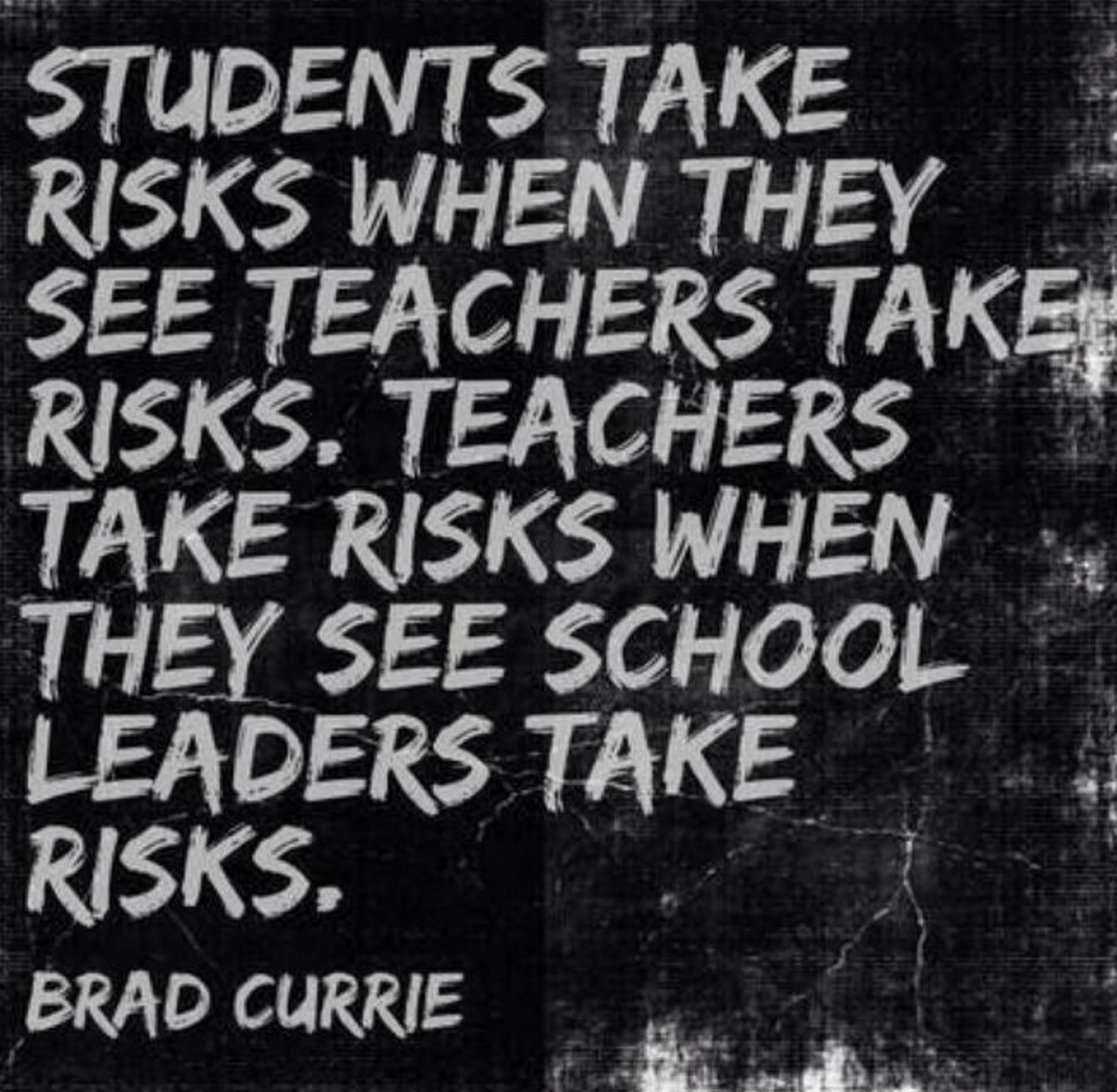


9. Leaders help support what others want to do, not what the leader is pressuring them to do.

I think this is a big statement. Pressure is not an effective strategy. Let's get behind the hopes and dreams of teachers who are doing the work, and help them reach their goals.

10. Start with strengths and build from there.

Is data-driven really code for deficit-driven? No one is inspired by having the weaknesses pointed out. The leaders who inspired us the most, saw our strengths and made us feel 10 feet tall, and then they challenged us to get even better.

11. Make decisions based on the end users (students), not the providers (admin, teachers).

Let's remember that our purpose is helping students reach their dreams. And then let's make decisions that support those dreams. Too many decisions are made based on a narrow view of education and the convenience and comfort of administrators and teachers.

12. If you truly want to empower people, give them power. -Rafranz Davis

It's not enough to talk about empowering others. If people don't have the opportunities of choice and voice, it's going to inhibit change.

13. Don't point out problems unless you are willing to offer solutions or seek answers.

Pointing out problems without being a problem-solver is just blaming and complaining. 

14. Trust and relationships are crucial to learning and change.

Relationships, relationships, relationships. It's worth repeating. We must make people our priority. Only when we value people will we see progress. The trust that is established in healthy relationships provides the foundation and safety for giving yourself to a cause.

15. Access is agency.

Access and opportunity go hand-in-hand. When students have access to a connected device, they have the opportunity to make a positive difference, both for themselves and those around them. But, it's a choice. Access provides the opportunity. It doesn't guarantee every student will make great choices, but there is opportunity for learning in that too.

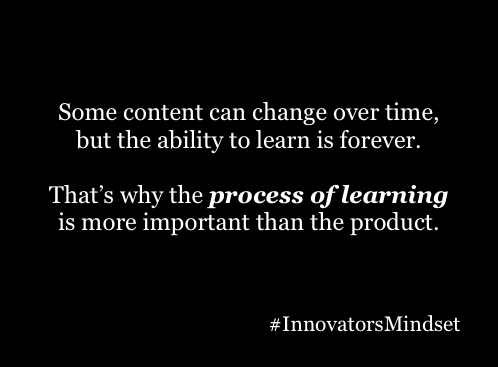
16. Content can change over time but the ability to learn is forever. -George Couros

Maybe learning how to learn should be the greatest desired outcome of schooling?


17. If you aren't facilitating a digitally literate classroom, you are becoming irrelevant.

So much of the way the world gets things done is through digital means. If you aren't embracing this fact in your classroom, you are quickly becoming irrelevant. Our students need to see how technology can help them make an impact in the world. And they need you to model it for them. Be a connected educator.

These ideas represent my notes and takeaways from the conference. Thanks to George Couros, Rafranz Davis, and other presenters for making it a great learning experience.

Monday, February 8, 2016

Guest Post: 6 Assumptions That Were Killing Reading In My Classroom


Guest Post by Amber Dlugosh


After four years of teaching novels and short stories from classroom sets, I daily stared into the eyes of students who collectively looked like they were slowly mummifying. I found myself exhausted and at the end of my rope, knowing that most students weren’t reading and those who were traversing all of the assigned content were not loving it. The learning climate of my classroom demanded a change, so I took a semester to fly south for the winter. In less poetic terms, I crafted my personal learning plan around reading instruction and led a small book study over Penny Kittle’s Book Love. After implementing many of the strategies Kittle discusses at length in her book, I was in awe at how easily the reluctance and apathy in my classroom melted away.

After much reflection, it's clear my previous classroom practices were hindered by flawed assumptions about reading. Below I trace how my assumptions have changed in recent months.

1. Students will not honestly engage in dialogue about their own reading habits.

Before making any changes in my classroom, I took an entire day of instruction to host a roundtable discussion with each of my classes. Students were very aware and very honest about their perceptions of reading and how the structure of previous schools/classrooms impacted these perceptions in both positive and negative ways. The biggest take-aways from those discussions? 1) Choice. Choice. Choice. Kids want the freedom to choose their books, 2) Testing reading comprehension kills the love of reading and promotes cheating, 3) Requiring kids to read at their Lexile level severely dampens the love of reading for all readers, especially skilled readers, 4) The love for reading typically died around middle school, with high school driving the final nail into the coffin, and finally 5) Most kids want to be readers. They voiced the desire coupled with feelings of inadequacy to call themselves such.

2. Teachers must focus on rigor, so students should not be allowed to read below their personal level.

Adults frequently read for pleasure. The majority of Barnes and Noble is stocked with books created to entertain, yet somehow, teachers started assuming that the main goal of reading was to boost reading levels, and the only way to do so was to read a tad above where you’re currently testing. When students are reading as frequently as mine are, there is no worry in allowing texts lower than grade level, because they are exercising their reading muscles and critical thinking skills that will be needed for more difficult texts. It is my job to monitor their reading habits and push them toward more complicated texts, but there is no harm in re-reading The Hunger Games and noticing new details that were missed the first time through, which causes students to hunt for those things in future, unfamiliar reads.

3. Teachers must utilize class-wide texts to monitor and assess properly.

Class-wide novels, short stories, and articles have their place. However, when they are the main source of reading in a classroom, students can easily participate without ever having read a page. Trust me. They told me. Quizzes and tests felt like necessary assessment, but I think I overlooked the power of conversation. Before, I was always wary that my kids weren’t actually reading. Now, I am certain students are reading because they can’t stop talking to me about characters, stories, authors, movie comparisons, real events, news articles relating to their reading, etc. I no longer have to waste my time with comprehension quizzes; instead, we are able to plunge deeper into other content goals that require critical thinking.

4. The majority of students will not read by choice.

I am now entirely convinced that students do not read for one main reason: they have not found the right book. Students know reading is valuable, and even those who struggle, still long to build their skills. Once they find the right book, it is hard to get them to stop. Now, I rarely have issues with technology distraction in my room; instead, students are sneaking more reading time in during my instruction. One young lady who openly admitted to reading frustration due to her low skill level asked to sit in my room after school and read. Every day, I write passes for kids who are begging to come to my academic help time, which is now 30 minutes devoted to quiet reading. Students WANT to read; we must help them gain the proper tools to do so.

5. Expecting every student to read the same assignment is perfectly reasonable. 


When I started calculating my own reading rate for each book I consumed, I noticed an alarming issue: I do not read at a consistent pace. My background knowledge, my interest with the content, the author’s style, the author’s word choice, and my own distractibility all played huge roles in my reading speed. If that is true for me, someone who is a skilled reader, how much more so does it vary for my students? It was foolish of me to think every kid could read the same novel at exactly the same speed and enjoy my class simultaneously. Now, students calculate their own weekly page goals by configuring their reading rates.

6. It doesn’t matter if students read books, as long as they’re reading.

Because the majority of my students weren’t reading, I used to feel like any amount of reading they conquered was considered a victory. I caught myself saying things like, “If I can’t get them to endure through a novel, we can read articles and short stories and still see gain.” No. I am no longer convinced of that because I now see what great trait I was neglecting: endurance. A beautiful thing happens when students complete an entire book! Their confidence flourishes, and their appetite for more increases.

I am continuing to learn from this new classroom endeavor, and my students challenge me each day with new book recommendations and interesting discussions. However, I feel the overall learning climate could be summarized by a quote I overheard a student saying to the class at the start of the day:

"I used to stay up late playing video games, and now I read. I’m like an adult or something."


Amber Dlugosh teaches 10th and 12th Grade ELA at Bolivar High School. She also serves as a member of our building leadership team. Currently, she is working on a Master's Degree in Secondary English Education at Missouri State University. She has been closely affiliated with National Writing Project as a participant and presenter.

Question: How do you bring life back into reading for your students? What practices do you need to lay to rest? I want to hear from you. Leave a comment below or respond on Twitter or Facebook

Thursday, February 4, 2016

What Gets Noticed Gets Done

In a recent post, I described how every teacher and classroom in your school deserves to get noticed. There are so many good things happening. When we feel noticed and appreciated, it always makes us want to do more than what's expected.

But what types of things should we notice? That matters too. Whether you are a teacher or a principal, the things you notice help build the culture of your classroom and school. We communicate what's important and what we value. When you recognize certain actions and attitudes in others, it encourages more of the same.

Popular advice says, "What gets monitored get done." While this might be okay management advice, it might not be the best leadership advice. We can monitor certain things and maybe get improved behaviors and results we want in the short term. 

But if we really haven't invested in the people and their capacity, it probably won't last. The desired behaviors and outcomes aren't sustained. Leadership is about influence and change that endures and empowers. 

But when we notice the good work other people are doing, it is affirming to them. It builds them up and helps them reach their potential. If we want lasting change and to help people build their capacity in a personal way, we need to notice their strengths.

So while there may be a place for data, assessment, and accountability, why aren't we talking more about opportunities, commitment, and responsibility? 

What gets monitored
What gets noticed
Data driven
Learning driven
Assessment work
Creative work
One-size-fits-all
Personal touch
Someone else’s idea
My idea
Deficits
Strengths
Implementation
Innovation
Strategy
Culture
Outcomes
Opportunities
Accountability
Responsibility
Compliance
Commitment


I want to hear from you. Does your school focus more on monitoring or noticing? It could be, and maybe should be, some of both. Share a comment below or respond on Facebook or Twitter.

Tuesday, February 2, 2016

Popular Posts Everyone's Reading #ICYMI

In case you missed it (#ICYMI), here are a few recent articles that were most popular with my readers. The top post lists several things educators should try to communicate to students as often as possible. In the next post, I give some advice that I actually think teachers should ignore. Some of these may surprise you.

One of the posts I enjoyed the most highlighted the differences between excellence and success. Is your school successful, excellent, or both? Next up was a list of reasons educators should embrace change. And then I considered what teachers really want from principals. How is trust built?

Our school has really been focused on reading of late. I shared several ways to promote reading no matter what you teach. Listed next is a post listing some of my favorite blog posts and bloggers from 2015. Finally, I reflect on creating a student centered classroom where student voices are valued and heard.

I hope you see something here that catches your eye and might prove helpful to you. If you like something, give me some feedback by leaving a comment or sharing the post on Twitter or Facebook.

Sunday, January 31, 2016

Your Classroom Deserves to Get Noticed


In a previous post, I examined various benefits to sharing the good things happening in your classroom. I made the case that it is essential to share. When we make learning visible, it creates a stronger learning culture throughout the school. Sharing helps us learn from each other and creates opportunities for collaboration.

But I wanted to look at one more reason it's important to provide others with insights into the inner workings of your classroom.

Your work needs to be noticed. You deserve to feel appreciated.

Nearly every survey I've read on employee satisfaction shows that people want to feel respected and noticed for what they contribute in the workplace. Feeling appreciated is very important to work satisfaction. It's interesting to me that this is often ranked higher than salary, benefits, or opportunities for advancement. 

I suspect educators are no different. We want to feel like we are making a difference, and it's great to have our efforts validated by people familiar with our work. You deserve to be noticed.

As principal, I realize how important it is to recognize the efforts of our staff. Honestly, I need to work at consistently doing this. Although I've done a variety of things to show appreciation, I also miss too many opportunities to do so. It's my sincere desire that my appreciation shines through even when I fail to be intentional in this area. I have great admiration and respect for the contributions of each member of our staff.

But here's something I've noticed. Because some teachers share more about what's happening in their classrooms than others, it's easier to be familiar with their work. Of course, I try to visit all classrooms regularly. But there's still so much that happens. A day in a high school with 800+ students is frenetic. And a principal's job is built for distraction.

More than once, I've learned of wonderful, dynamic, innovative learning in our building that might have gone unnoticed had I not accidentally learned about it. There are teachers who are quietly going about their work and doing a great job. They are amazing. But they are under the radar.

But I'm asking you to share. Please.

Your students deserve to get noticed. So does your classroom and so do you. Without a doubt, there are great things happening in your world of learning that need to get noticed. You give extra effort. You create improved opportunities for student learning. You have moments of awesomeness.

So teachers, share what's happening in your classroom. Advocate for your students. Reach out. Connect. Share. I'm suggesting you can contribute to your own sense of feeling appreciated by sharing and reflecting on your work. 

Your principal wants to recognize your efforts (hopefully). And so do your colleagues (hopefully). A healthy school culture will see people getting genuinely excited about other people's successes.

And principals, be visible and available. Ask teachers what's happening in their classrooms. Ask what you can do to help. Give your teachers the confidence they need to share their work with you and others.

A person who feels appreciated will always do more than what is expected.

Question: How does your school create a culture of appreciation? I want to hear from you. Leave a comment below or respond on Twitter or Facebook

Thursday, January 28, 2016

8 Ways Sharing Is Essential For Educators


If you believe good things are happening in your classroom, do you have an obligation to share them? That's a question you may not have considered before.

Some teachers are constantly sharing the good things happening in their classrooms. They share in conversations, through email, on social media, in the local newspaper, and just about any other way possible. The make learning visible and allow others to see the work students are producing and the ideas they are trying as a teacher.

Others are quietly doing great things, but they don't really share much with colleagues or anyone else. They might be a bit more reserved, or feel like they are self-promoting. Or maybe they're not confident what they're doing is worth sharing. For one reason or another, they don't choose to share much about what's happening in their classroom.

But it is possible to move past personal preferences or tendencies. What is best for students? I believe sharing positive things is an important part of an educator's professional practice. I believe it's essential and not just an add-on. Isolation is the enemy of improvement. To provide the best learning environment for students, educators need to share with one another. So even if it doesn't come naturally for you, it might be something for you to work on doing more often.

8 Ways Sharing Is Essential For Educators

1. It inspires new ideas. When you share something from your classroom with another educator, it might spark a conversation that leads to something new for their classroom. Ideas always build on other ideas, and they get better as we get more input and various perspectives. It's the power of collaboration.

2. It creates a culture of learning and continuous improvement. What you choose to share with others reveals a lot about what you value. By talking about student learning and how to make it better, you are helping support a culture of improvement and keeping the focus on the bottom line, better learning for students.

3. It builds self-efficacy. Sharing good things that are happening is encouraging to self and others. We all want to feel like we have the ability to do our jobs well and make a difference. When you focus on the positive, it gives you a greater sense you can impact your work for the better.

4. Success breeds success. When something is working well, share it. It can give others the confidence and inspiration to replicate what you are doing or build on it. 

5. Sharing pushes your own thinking. When you share with others, you inherently think differently about the idea. It causes you to reflect and consider the audience and what might be important to them. Reflection is extremely important for taking your thinking deeper. We tend to reflect more on things that we are thinking of sharing with others.

6. Taking risks can encourage others to take risks. When you try a new idea in your classroom or do something innovative, there is an element of risk. By sharing this experience with others, they might gain the confidence or inspiration to step out of their comfort zone to try something new. 

7. You might enjoy your work more. I think when teachers share the positive things happening in their classrooms, they feel validated for what they do. Everyone needs to feel noticed and appreciated in their work. It's more likely for this to happen if you reveal some of the neat things that are happening in your classroom.

Embedded image permalink8. It's too good not to share. When students do something amazing, it's just a shame for it not to be shared outside the classroom. So many things get noticed in our culture that aren't positive. We need to do our part to amplify the best things in the classroom.

Question: How are you sharing the great things happening in your classroom? Leave a comment below or share on Twitter or Facebook.

Resource: The Innovator's Mindset by George Couros


Sunday, January 24, 2016

9 Reasons Every Educator Should Embrace Change


I've been reading The Innovator's Mindset by George Couros. The book is fantastic. It goes in-depth explaining the how and why of innovation in education. It makes a compelling case for the power of innovation to improve schools. The book got me thinking about why educators need to embrace change. As I've learned from Couros, it's possible for every educator to be an innovator.

Innovation requires a willingness to look at problems with new eyes, and to see challenges as opportunities. Students are going to need skills for their future beyond the academic achievement goals that have been the overwhelming focus of the past. To help students be future ready, schools will need to help students become adaptable learners.

Schools need to help students develop leadership skills. They must be global citizens and understand how to work with people from different cultures and backgrounds. They need to solve complex problem, work in teams, communicate effectively, and have digital skills. We need to make creativity a top priority. But the only way schools will meet the demands of the changing world around us is to innovate and embrace change.

If you still aren't convinced, here are nine reasons educators should embrace change. 

1. Change is inevitable. It isn't productive to resist it, because it is impossible to avoid. Change will happen. When you embrace it, you can influence the direction and outcomes of the change. Change either happens to you, or you take ownership of it. Most of us become comfortable with things the way they are, even though everything around us may be changing. The only way we can provide schooling that is relevant is to accept change and learn and grow.

2. You can make a difference. Some people resist change because they believe it won't matter anyway. But your efforts to embrace change will create better learning opportunities for students. Believe in your ability to use change to make a positive impact.

3. Growth means risk. You can't grow without risking something. We stay with what's familiar because we are comfortable with it, but that's not progress. We need to have a growth mindset. When we take this approach, we thrive on taking risks and trying things that aren't a sure thing. We want to take risks. When we fail, it's not fatal. It's just proof we are trying.

4. You can't expect to do the same thing and get different results. Most every teacher is not entirely satisfied with how students are learning. Most see problems with student motivation or engagement. Is it reasonable to think these issues will improve without changing teaching or education? Change and innovation are necessary to solve the problems we see in our schools.

5. Giving up "good" can help you find "great." As Jim Collins pointed out, good is the enemy of great. It is hard to embrace change when things are going well. My test scores are good. I'm a respected teacher. Our school is a shining star in our community. When things are going well, it's harder to see the need for change. But we should never be satisfied. We should always seek ways to improve learning for our students.

6. New opportunities are waiting. Letting go is hard. It can be very difficult to put aside the things that we find most comfortable. But when you step out of comfort zone, there is potential for incredible fulfillment and reward. We stand to gain so much for our students and for our own personal fulfillment. Innovation and change starts with a belief that there might be a better way. We have to believe these opportunities await.

7. Personal preferences can be harmful. Some people resist change because of their personal preferences. Even if they see an idea has the potential to improve things for students and learning, they may not embrace it because it makes them uncomfortable. It's not what they prefer. Educators cannot afford this mindset. You must be flexible in your state of mind and welcome any opportunity that can move education forward.

8. Your students need to see adaptability. You have the opportunity to model change and innovation for your students. When you are innovative in the classroom, students are more likely to become adaptable, innovative learners. These skills will serve them well. We can't expect students to be innovative unless educators are first willing to be innovative.

9. Leaders embrace change. Effective leaders embrace change and help others embrace change too. Whether you have a formal leadership position or not, your school needs leaders who are problem solvers and who are willing to try new things. Every person can be a leader. Your words and actions can help positive change occur in your school.

Question: How will you embrace change in your classroom or school? I want to hear from you. Leave a comment below or share on Twitter or Facebook.

Friday, January 22, 2016

Should We Ban Teacher Training?


Every time I hear someone talk about having a "teacher training" I cringe just a little. For some reason, it makes me think of our dog Max. He can do all sorts of tricks. Sit. Spin. Beg. Rollover. He's a smart dog. He's been trained to do his routine on command, and he's a quick learner. As much as I like Max, I don't want to associate his tricks with the development of professional educators.

I realize no one intends to relate "teacher training" to training a pet, even if the word training doesn't seem to entirely fit with the complexities of professional learning. I guess for me the word carries some baggage, some negative connotations. 


Google defines training as follows:


It's kind of funny that the example provided is "in-service training for staff." That sounds like some of the worst professional development I've ever experienced.

The problem with training is it often refers to the one-size-fits-all, sit and get professional development that is known to be highly ineffective. It doesn't allow for individual differences. It makes teaching a set of rules or procedures intended to guarantee a certain outcome.

But that's not how it works. Teaching is a more of an art than a science in my book. What works for one teacher rarely works exactly the same for another. 

The things that we learn in teacher training are rarely ever of enduring value. It's usually one new program or another. It won't be relevant in 10 years, or it's the latest fad but has very little personal meaning. Everyone is expected to benefit from it the same.

So instead of teacher training, let's promote teacher learning, development, growth, networking, and collaboration. Authentic learning and reflection allows teachers to take what they learn and make it their own. Successful teachers don't simply implement what they've been trained to do. They make complex decisions based on accumulated expertise and professional autonomy.

I'm not calling for a ban on professional development. Let's just end the bad PD. Sometimes it's referred to as teacher training.

Question: Does teacher training have a bad connotation for you? What do you want out of your professional learning? I want to hear from you. Leave a comment below or respond on Facebook or Twitter.

Wednesday, January 20, 2016

Are Teacher Observations Helpful?


A recent trend has been for schools to make walk throughs or mini-observations part of the instructional evaluation and growth process. But the purpose and effectiveness of various approaches differs greatly from school to school and administrator to administrator.

A recent study from the University of Pennsylvania Graduate School and American Institutes for research called into question the effectiveness of classroom observation as a means of assessing teacher effectiveness. The report indicated that students' prior academic achievement was a significant predictor of success on the evaluation, perhaps more influential than actual teaching effectiveness. The study suggests that high-stakes observation systems may be flawed.

But this post from Todd Schmidt expresses great enthusiasm for principals getting into classrooms. He describes how being in classrooms is an important way of supporting teachers. His approach involves offering help to teachers in just about any way needed. He starts with a desire to serve. His article is a must-read.

So what makes classroom visits worthwhile? A focus on growth and relationships.

I have tried a variety of things to make walk throughs better. I believe these mini-observations/classroom visits can be helpful with the right conditions. My goals are to 1) support instruction and show that learning is important by my presence in classrooms, 2) to help teachers grow stronger and feel validated in their professional skills, and 3) to fulfill evaluation necessities.

I think the greatest value in the process is the conversation that results about teaching and learning. The opportunity for a teacher and principal to work together to reflect on a lesson brings new meaning and better understanding of how instructional decisions impact the classroom. It builds a stronger relationships around teaching and learning.

So let's get to specifics. After years of reflection, practice, and reading on the topic, I've settled on the process describe below. But it's challenging to consistently fulfill these aims. Occasionally, I fail to follow-up with the face-to-face conversation or the email doesn't happen. I'm a work in progress and so is this system.

1. Make walk throughs frequent and routine. It can be very challenging to do this. The principal's job is built for distraction. The goal is to have multiple drop-in visits at various times throughout the school year to get an overall understanding of the teacher's work and how students are learning. The conversations gain depth and clarity when the teacher and the principal understand the classroom dynamics over time.

2. Avoid checklists or forms. I've used a variety of checklists and forms in the past, but I don't anymore. I don't want the teacher to focus on boxes that were or were not checked. Not every instructional strategy is going to be present in every lesson, but many teachers think it's a negative if they don't get lots of positive check marks. The forms become the focus instead of the conversation. I want both parties offering ideas into the dialogue. With forms and checklists, it feels like the principal is the only voice that matters.

3. Don't rate teachers on walk throughs. I realize there are many new evaluation systems that require the observer to rate each teacher with each visit. These systems require extensive training to have any reliability or consistency, and even when training is comprehensive, I believe they are susceptible to bias. As soon as you rate teachers, it creates a natural tendency to "look good" for the system rather than to reflect on "what's good" or how one can grow. When these ratings systems are high stakes, there is even greater pressure play a game instead of focusing on authentic improvement.

4. Talk to students about what they are learning. If it won't interrupt the teacher or the lesson, I always try to talk with students while in the classroom. It helps me really understand what is going on and how they are learning. It also demonstrates to students that I support the efforts they are making. I care about you and what you are learning.

Some questions to ask:
  • What are you learning today? 
  • How are you learning it? What activity are you doing to learn about this?
  • How will you know you've learned it?
  • What do you do if you don't understand or run into a problem?
5. Don't use your electronic device in the classroom. In the past, I always took notes on my electronic device. But I think that was sometimes a distraction for me or for the teacher. The teacher might wonder what I'm typing, or I might miss something important as I type. Now, I devote all of my attention to observing and interacting with students. Then I make my notes on my electronic device right after I've left the classroom. The notes just help me remember some conversation starters for when I visit with the teacher. I use the Evernote app on my iPhone.

6. Make the visit long enough to have at least one thing to praise and one thing to polish. Some visits are very short and others last a little longer. Usually, I observe from 5-15 minutes. I want to have at least one thing to praise, or reinforce, about the lesson and one thing to suggest for improvement. Often, the suggestions are actually questions, "What ideas might you try to involve more students in the discussion?" I want to be extremely positive and make the teacher feel safe and supported.

7. Meet with the teacher briefly face-to-face to discuss the visit. Within 24 hours, I do my very best to meet with the teacher face-to-face to have a very brief conversation about the classroom visit. I present the positive feedback and then ask a question or make a suggestion for a possible improvement. I always try to remember that I am only seeing a small snapshot of a much bigger picture.

7. Follow-up with an email to affirm what was discussed during the visit. After my visit with the teacher, I send an email thanking him or her and summarizing the main points of what was discussed. I think this helps to reinforce the ideas we generated and helps to create more traction for possible improvements or adjustments. Ultimately, I want every interaction generating more excitement and passion about teaching and learning.

Note: The work of Kim Marshall has had the greatest influence on this post and my work of instructional observation and coaching. 

Question: How are observations working at your school? In what ways are they helpful or not helpful? Leave a comment below or share on Facebook or Twitter. I want to hear from you!

Sunday, January 17, 2016

A Tale of a Distracted Learner


The teacher gives a task. 

Make a list of five things that you could do to have the greatest impact on your project. The student quickly gets to work, listing five things almost effortlessly, because he is so passionate about his topic. 

As he finishes his list, he thinks of a video he's seen before on YouTube that might be helpful. He wants to share it with other members of his project team, so he heads over to YouTube to find the video.

But the teacher zeros in, seeing him on his device. He moves over, places his hands on the student's shoulders, "Have you finished your list?" His words are filled with doubt. 

The student feels accused. He naturally wants to explain. Yes, the list is finished. In fact, I was taking the task even further

But the teacher is having none of it. He turns to the rest of the class, "He's doing his shopping on Amazon. At least he's not searching pornography."

What the heck?!?

Yes, the events I just described are true, including the uncomfortable reference to porn. But they didn't happen to a student in a classroom. They happened to me in a workshop I recently attended. We were given a task. To list five things that would have the greatest impact on our school. I finished the task. And then I was called out by the presenter in front of the group.

So how did that make me feel? Angry, frustrated, embarrassed, shamed, harassed, misunderstood? Yep. It was the most awkward thing I've experienced in a professional meeting.

But it got me thinking, I wonder if any of our students have ever felt this way. Have our "distracted" learners felt misunderstood under similar circumstances?

This type of thing should never happen in a classroom. We should never rob a student of their dignity, whether they are distracted or not.

Before you judge your students as distracted, consider if your goal in the classroom is compliance and control OR engagement and curiosity?

Full disclosure: I must admit I was not fully attentive in the workshop referenced in this post, although I was at the time of the interaction I described. I did not find the most of the presenter's content helpful. I was put off when he asked us to identify and share who we thought were the worst schools in our area. I didn't appreciate the activity where we had to critique our own superintendent publicly. When he repeatedly boasted of his $500,000 salary as superintendent, that didn't set well. When he declared that leadership is manipulation, I was ready to walk out. And when we had the next break, I did. 

Question: How does the story in this post get you thinking? I want to hear from you. Leave a comment below or share on Twitter or Facebook.

Thursday, January 14, 2016

11 Simple Ideas to Promote Reading No Matter What You Teach


You probably agree reading is one of the most important skills your students need to be successful. Since it is so important, there should be expectations for teachers across all subjects to promote and teach reading within their discipline.

But most content-area teachers don't have much background in reading instruction. They may not know where to start. While most teachers ask students to read materials for their class, they may not have strategies to support growing readers.

But even if you haven't had formal training related to reading strategies, you can still promote the love of reading in your classroom. The best thing you can do to improve reading is to to inspire more reading. When every teacher promotes reading, it makes an incredible impact on the learning culture of the school.

Here are 11 simple ideas to promote reading, no matter what you teach. This list isn't meant to be comprehensive. These ideas are just basic things anyone can do, even without training in reading instruction.
 
1. Share what you are reading with your students. It doesn't matter if you are reading professional materials, online articles, or your favorite fiction author. Talk to your students about what you are reading and let them know reading is something that you enjoy and that it is helpful to you.

2. Ask your students what they are reading. Take advantage of every opportunity to learn what your students like to read. What authors do they enjoy? What genres? When we take an interest in the reading lives of our students, it provides another way to connect and build a relationship. And, it also reinforces their identity as a reader.

3. Post a list in your classroom of books you want to read next. It's so simple to post a list of what you plan to read. And the more teachers who do this, the more variety of titles students will encounter each day. Your book interests might just be the spark a reluctant reader needs to get started.

4. Recommend a book or an author to a student. It's great to make reading suggestions to students. Again, it show the value that you place on reading. Even better, when you know your students interests well enough, you are able to make suggestions that are tailored to their individual preferences.

5. Allow students to choose what they read. When students feel they have little choice in what they read, it can kill the desire to read. Every class has material that is required reading, but allowing students to make some choices can be very helpful. Even if there is a certain topic that is important to your classroom goals, it's still possible to give students reading choices related to the topic.

6. Create a classroom library. Several teachers in our school have recently established or expanded classroom libraries. A classroom library is a selection of books readily available for students to check-out and read. It gets books closer to the life of your students and classroom. You can ask for donations to start your library, or ask your school librarian to loan books from the school collection to be used in your class. 

7. Let students see you reading. Find time in your class to read in front of your students. It could be reading something related to your class, or it could be reading for the sake of reading. When students see you reading it sends a powerful message.

8. Have your students read regularly in class. All too often subject-area teachers are presenting content using outlines, study guides, and handouts that minimize the need for students to read. Ask your students to read regularly in class. Have them read with a pencil in hand to take notes and process information.

9. Do a book talk with your students. Talk to your students about a book you have read. It's a great way to reveal a little more of your personality and promote reading at the same time. A book talk includes a synopsis of the book describing some of the key elements and explaining what you liked or didn't like about the book.

10. Celebrate reading in your classroom. We strengthen values in our culture by what we celebrate. We can celebrate reading by talking about it, modeling it, and supporting it. Tangible rewards are not helpful to build independent readers. But class goals and celebrations can support a culture of reading. 

11. Share your reading goals with your students. What are your reading goals? Do you have a specific number of books you would like to read this year? It's great to set a goal and share it with your students. Maybe they will set a goal too. As they follow your progress and cheer you along, they will be more likely to choose reading for themselves.

Question: What other ways do you promote reading to your students? Share a comment below or on Twitter or Facebook.

Sunday, January 10, 2016

7 Trust-Building Behaviors Teachers Want From Principals


Early in my teaching career, I sometimes felt a disconnect with my building administrators. I never really viewed them as a resource to help me in my teaching. In a way, I think I cheered against them, because I really believed they were cheering against me. 

The fact that I once thought this way seems ludicrous to me now. I'm sure my principals wanted the best for our school, for me, and for my students. But the way we interacted left me feeling like their purpose was to catch me making a mistake, "Gotcha!"

I suspect this type of dynamic is not all that uncommon between leaders and followers, in and out of education. And I think there are lessons to be learned on both sides. These lessons are important to explore. It's impossible to have a healthy school when there is a lack of trust. 

7 Behaviors to Build Trust

Leaders and followers both have responsibilities for building mutual respect. But leaders need to set the tone and lead by example. Here are seven ways leaders can create a high-trust culture.

1. Listening. Too often leaders are pushing an agenda and trying to reach goals without really listening to others. Teachers need to feel heard. This means leaders show empathy and truly seek to understand the daily challenges and requests from teachers. Always put people first.

2. Develop shared meaning and purpose. Teachers and principals share many of the same goals, but we often experience our differences more intensely than our similarities. We all want students to learn, we want a safe environment, and we want a positive culture. Teachers want leaders to communicate positive intentions and create safety for dialogue to occur.

3. Progress, not perfection. Nothing erodes trust as quickly as a leader with a critical spirit. Great teachers want accountability, but they want leaders to communicate in a way that builds on respect and seeks progress, not perfection. All of us have areas we need to improve. Leaders need to spend most of their energy recognizing the positive and building on the strengths of others.  

4. Lead by example. Teachers want leaders who hold themselves accountable before they seek to hold others accountable. They want leaders to set the tone, to show the way, and to model the characteristics that would benefit the whole school. No job is too big or too small for a leader who is a servant leader.

5. Keep promises. Teachers want leaders who are promise keepers, who make commitments carefully, but stick to them. Trust-building leaders make honesty and sincerity a symbol of their honor. They seek to keep their promises at all costs.

6. Right wrongs. Even the most trustworthy leaders make mistakes. The key is to quickly right the wrong and admit the failure. Teachers respect leaders who own their mistakes and apologize immediately to those who were harmed. They do everything possible to avoid hurt feelings and bad blood.

7. Be authentic. Teachers want their leaders to be transparent and open. This means no hidden agendas. Authentic leaders reveal who they are and show what they value. They are self-aware and express their thoughts and feelings in healthy, caring ways.

When I became a principal, I quickly saw with new eyes. I learned just how difficult the job can be. But I also tried my best to always remember the perspective I had as a teacher. I hope every principal will strive to be the kind of leader your teachers need.

Share your perspective: What else do teachers need from principals? Leave a comment below or share on Twitter or Facebook.

Thursday, January 7, 2016

Who Are You Listening To?


Every day you hear from people who build up and people that tear down. You encounter voices who care about you, who lift you up, who invest in your well-being. You also encounter those who take away, who speak carelessly, and who doubt you in every way. 

As an educator, you will always have people who invest in you, and you will always have those who try to tear you down. It's true for everyone.

But who will you listen to? 

Will you spend your time thinking about the critic? Or, will you choose to focus on the positive? It's your choice. You can't control who you might meet in the course of your day, but you can choose how you respond to every influence. 

You can choose to magnify the words of affirmation, hope, encouragement, and truth. Or, you can choose to magnify the doubts, fears, and frustrations.

I urge you to listen to those who...

  • see the best in you.
  • build on your strengths.
  • encourage you.
  • show empathy.
  • make you feel stronger.
  • cheer on your best efforts.
  • give good advice.
  • are there when things are rough.
  • understand.
  • listen.
  • forgive you.
  • pray for you.
  • genuinely care about you.

There are a number of people who are my champions. I draw strength from their encouragement, and that in turn, helps me to give more to others. When we fill ourselves up with the positives, we can overflow into the lives of others.

Your influence matters too much to allow negative people to bring you down. Your students are counting on you. And your colleagues are counting on you too. Most of all your family is counting on you. So much of who we are is influenced by who we listen to.

Listen to people who want to lift you higher. Don't ever surrender your thoughts to those who would bring you down.

Question: Who do you listen to? How are you inspired by your champions? Leave a comment or respond on Facebook or Twitter.